
Duct insulation reduces heat transfer between conditioned air and the surrounding space, keeping cooled or heated air at the right temperature before it reaches your living areas. Norwalk, CA summers regularly push temperatures above 90 °F, and attic spaces in the area's mid-century tract homes can exceed 140 °F on hot afternoons — conditions that make uninsulated ducts and pipes a direct drain on your energy bill. Because attic conditions play such a large role, Bright Sky Attic Insulation is an insulation contractor serving Norwalk and the surrounding communities of Downey, Bellflower, Cerritos, La Mirada, and more, and we offer free inspections for both residential and commercial properties.
What is duct and pipe insulation?
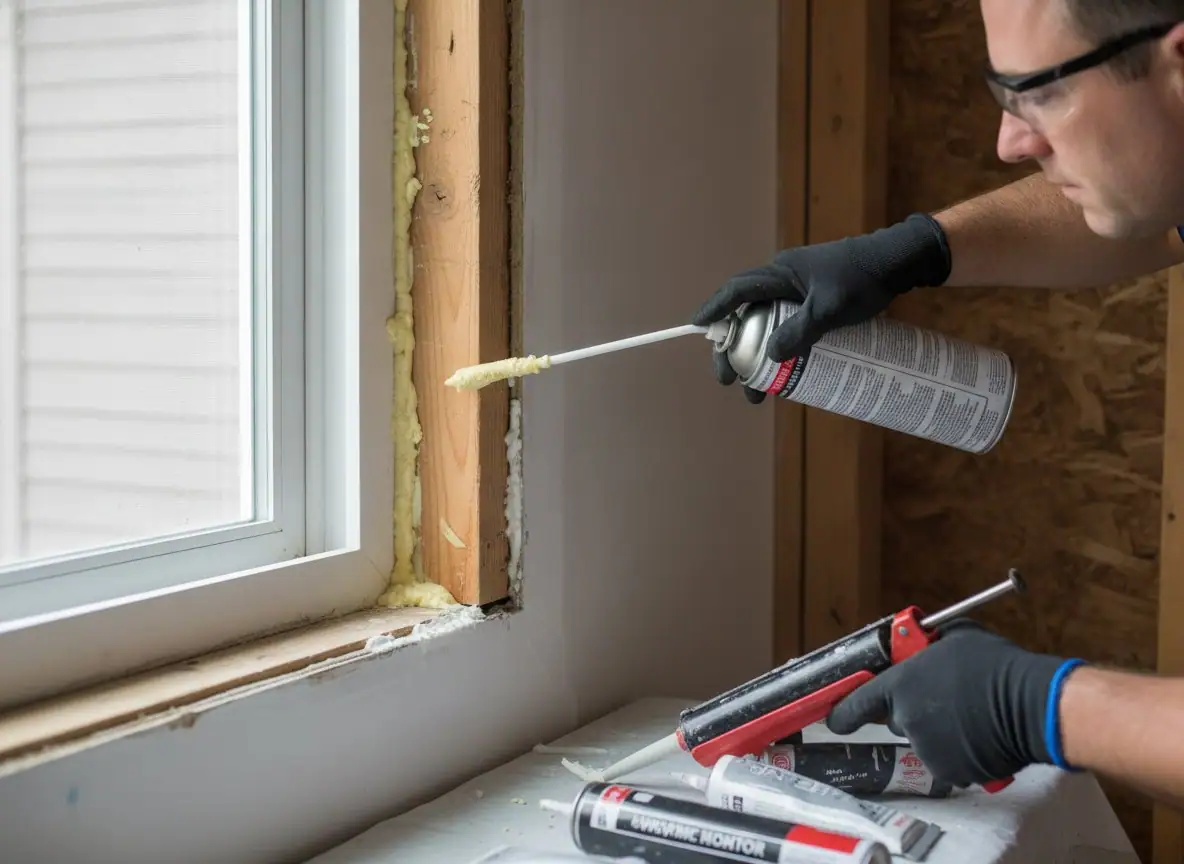
Duct insulation is a material layer applied to the outside or inside of HVAC ductwork to slow the transfer of heat between the conditioned air inside the duct and the unconditioned space around it. Pipe insulation serves the same function for plumbing lines, AC refrigerant lines, and water heater connections — it limits heat gain, heat loss, and condensation. Both products are rated by R-value, a measure of thermal resistance: the higher the R-value, the more resistant the material is to heat flow. Together, duct and pipe insulation form the thermal boundary that makes your HVAC and plumbing systems work at the efficiency they were designed for — and without them, even a properly sized, well-maintained system loses a significant share of its output before it ever reaches a room.
Is it a good idea to insulate your ductwork?
Yes — insulating ductwork is one of the highest-return upgrades available to Norwalk homeowners, because ducts routed through unconditioned attics, crawl spaces, or garages are exposed to temperature extremes that cause energy loss at every foot of uninsulated run. The U.S. Department of Energy notes that leaky, uninsulated ducts can account for 20–30% of a home's heating and cooling loss. In Norwalk's climate zone (California Climate Zone 10), attic HVAC ductwork faces intense summer heat loads, meaning your air conditioner may be working hard to deliver air that has already warmed by 10–15 °F by the time it exits a register. Insulated ducts maintain delivery temperature, reduce run time, and lower peak demand on the unit. The question is not whether to insulate, but which material and R-value are right for your specific system and attic configuration.
Free, no-obligation estimates
Talk to Bright Sky Attic Insulation
Tell us what you need and we’ll take it from there.
Signs your ducts or pipes need insulation
Uninsulated or under-insulated ducts and pipes produce a recognizable set of symptoms that homeowners in Norwalk often attribute to equipment problems instead of thermal losses. Watch for these indicators:
- Rooms that never reach the set temperature, especially rooms farthest from the air handler, where duct runs are longest.
- High electricity bills in summer relative to similar-sized homes in the area.
- Condensation or sweating on ducts or pipes in the attic — a sign that cool surfaces are contacting humid air.
- Visible deterioration on existing duct wrap: crumbling fiberglass, torn vapor barriers, or separated duct board joints.
- Water stains near pipe penetrations in drywall or ceilings, which can indicate condensation dripping from cold pipes.
- Noisy or short-cycling HVAC equipment, which sometimes results from the system compensating for delivery losses.
- Hot water that takes a long time to arrive at fixtures when pipes run through an unconditioned attic or crawl space.
Once you have identified one or more of these symptoms, the next step is understanding which insulation product will solve the problem — which requires knowing what options exist for ductwork specifically.
At a glance
What is the best type of insulation for ductwork?
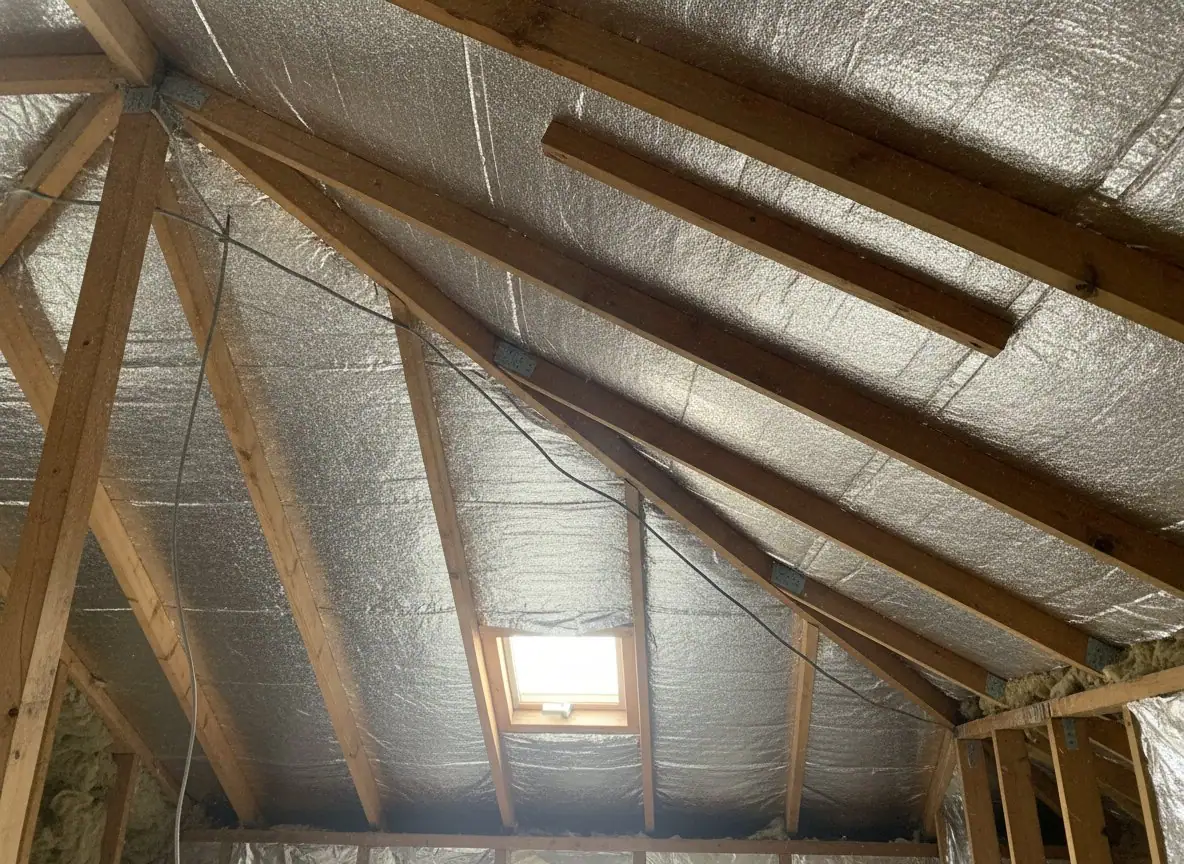
The best duct insulation type depends on whether the duct is exterior (wrap or board applied outside the duct wall) or interior (liner applied to the inside surface), and on the duct's shape, location, and whether it is flexible or rigid. The most common products for residential HVAC duct insulation are fiberglass duct wrap, duct board, duct liner, foam board, and reflective bubble-foil. Each has distinct strengths, and in Norwalk attics — where radiant heat is often the dominant load — combining a reflective product with a mass-insulation product frequently outperforms either alone.
| Material | Application | Typical R-Value Range | Best For | Notes |
|---|---|---|---|---|
| Fiberglass duct wrap | Exterior wrap on rigid or flex duct | R-4 to R-8 (depending on thickness) | Attic supply and return runs | Most common residential product; vapor-retarder facing required in humid areas |
| Duct board (rigid fiberglass) | Forms duct walls; replaces sheet metal | R-4 to R-6 per SMACNA standards | Fabricated supply plenums, straight runs | Integrates structure and insulation; requires careful sealing at joints |
| Duct liner | Interior lining of sheet-metal ducts | R-2 to R-4.2 (1–2 in. thickness) | Sound attenuation; supplemental thermal performance | Reduces airflow area slightly; must meet ASTM C1071 for air erosion |
| Foam board (polyisocyanurate or XPS) | Exterior wrap or box enclosure around duct | R-5 to R-6.5 per inch (product-dependent) | Tight spaces, encapsulated crawl spaces | Rigid; must be covered or protected from UV and mechanical damage |
| Reflective bubble-foil (radiant barrier) | Exterior wrap; often combined with fiberglass | Supplemental; rated by RIMA test method (not standalone R-value) | High-radiant-load attics | Effective only when facing an air gap; not a replacement for mass insulation |
What are the best insulation materials for HVAC ducts?
Fiberglass duct wrap remains the most widely installed HVAC duct insulation material for Norwalk attics because it is flexible, available in R-4, R-6, and R-8 ratings, and compatible with both round flex duct and rectangular sheet-metal runs. Duct board is preferred when new plenums or straight supply trunks are being fabricated, because the board serves as both the duct wall and the insulation in one assembly. Duct liner is selected primarily when noise reduction is a goal alongside thermal performance — it absorbs fan and airflow noise inside the duct. Foam board products such as polyisocyanurate (polyiso) offer a higher R-value per inch than fiberglass, which matters in tight mechanical spaces where thickness is limited. Reflective bubble-foil products reduce radiant heat pickup and are particularly useful in Norwalk attics where the roof deck can radiate intense heat downward onto duct surfaces; however, they must face an air gap to perform as rated and should be paired with a mass insulation product for full thermal protection. The choice between these materials is not simply a question of R-value: installation geometry, vapor control, and local energy code requirements all factor into the selection. Air sealing is part of that picture too, and our air sealing service page explains how it fits alongside insulation.
What R value do I need for ductwork and how thick should duct insulation be?
California's Title 24 Building Energy Efficiency Standards require a minimum of R-6 for ducts located in unconditioned spaces such as attics, with R-8 required for ducts serving low-rise residential buildings under the 2022 Title 24 standards. These are minimum code requirements; higher R-values are always permissible and often cost-effective in Norwalk's hot climate, and if you're weighing an upgrade, our page on what insulation work will cost can help you plan. For fiberglass duct wrap, achieving R-6 typically requires approximately 1.5 inches of insulation, while R-8 requires approximately 2 inches — always verify the manufacturer's published R-value table for the specific product, as density affects performance. Duct liner installed on the interior of sheet-metal ducts reduces the duct's internal cross-sectional area, so thickness is usually limited to 1 inch (approximately R-2 to R-3) unless airflow calculations confirm the reduction is acceptable. For foam board enclosures, the thickness required depends on the product's published R-value per inch. The correct approach is to match the insulation system to the Title 24 requirement for the installation location, then assess whether a higher R-value is justified by the length of the duct run and the severity of the attic temperature. Knowing the minimum code value is the starting point; the next question homeowners often ask is about a specific construction rule that applies to duct runs near unconditioned spaces.
What is the 2 foot rule for ducts?
The "2-foot rule" for ducts refers to a provision in ASHRAE Standard 90.1 and reflected in California's Title 24, which states that ducts and air handlers located entirely within conditioned space do not require insulation — but any duct segment that passes through or is adjacent to an unconditioned space for more than 2 linear feet must be insulated to the applicable R-value. In practical terms, this means a short duct stub passing through an attic floor or a brief run through an unconditioned garage is still subject to insulation requirements once that run exceeds 2 feet. For Norwalk homes where ducts often exit the air handler in a conditioned hallway closet before rising into an unconditioned attic, this rule is directly relevant: the moment the duct enters the attic and the run extends past 2 feet, insulation is required by code. Homeowners and contractors sometimes miss this detail when only the longest attic trunk lines are insulated while shorter branch runs — still exceeding 2 feet in unconditioned space — are left bare. Understanding this rule helps clarify where insulation is legally required and where it is optional but still beneficial; the type of pipe and line insulation used in the same spaces follows a parallel logic.
Pipe, Ac line and water heater insulation
Pipe insulation in Norwalk attics and crawl spaces covers three distinct systems: domestic plumbing lines, AC refrigerant (suction) lines, and water heater supply and return connections. Each uses different materials suited to its temperature range and exposure conditions.
Domestic plumbing and hot water pipes
PE foam (polyethylene foam) is the most common pipe insulation for domestic hot and cold water lines. It is sold as pre-slit tubes sized to match standard pipe diameters and is closed-cell, meaning it resists moisture absorption. Cold water pipes in a hot Norwalk attic can sweat in summer, dripping condensation onto drywall below; PE foam prevents condensation by keeping the pipe surface above the dew point of the surrounding air. Hot water pipes lose heat to unconditioned attic air between uses, increasing the wait time at fixtures and wasting water and energy; PE foam slows that heat loss. For water heater connections, insulating the first several feet of both the hot outlet and cold inlet pipes is a low-cost measure that meaningfully reduces standby heat loss.
Read moreShow less
AC refrigerant lines
The suction line — the larger, cold pipe carrying refrigerant from the indoor coil to the compressor — must be insulated to prevent heat gain and condensation. The standard material is elastomeric rubber foam insulation, commonly known by the trade name Armaflex, which is a flexible closed-cell rubber product resistant to UV degradation and moisture. AC line insulation typically ranges from 3/8 inch to 3/4 inch wall thickness depending on pipe diameter and local conditions; the insulation is specified by the equipment manufacturer, and undersized or damaged insulation directly reduces system efficiency and can cause the suction line to sweat and drip. Replacing cracked, brittle, or missing AC line insulation is one of the fastest ways to restore system efficiency.
Water heater insulation
Tank water heaters lose heat through the tank walls (standby loss) and through uninsulated connection pipes. Many modern tank water heaters have factory-installed foam insulation, but older units often benefit from an exterior insulation blanket. Tankless water heaters have no standby tank loss but still benefit from insulated pipe connections when located in unconditioned spaces. Foam board and PE foam are both used for water heater pipe connections depending on the installation geometry.
How is duct and pipe insulation installed?
Duct and pipe insulation installation follows a consistent sequence that our trained technicians apply on every Norwalk project:
- Inspection and documentation. We photograph and measure existing duct runs, pipe locations, and current insulation condition. We note any areas of duct leakage, damaged vapor barriers, or missing insulation.
- Duct sealing before insulation. Gaps, holes, and disconnected joints in ductwork are sealed with mastic sealant or UL 181-rated tape before any insulation is applied. Applying insulation over leaking ducts traps the leakage problem and wastes the insulation investment — this step is non-negotiable.
- Removal of damaged existing insulation. Deteriorated duct wrap or pipe insulation is removed and disposed of properly before new material is installed. Installing new wrap over crumbling old material creates moisture traps and reduces actual R-value.
- Material cut and fit. Fiberglass duct wrap is cut to length and wrapped around the duct, with joints overlapped and secured. Duct board is cut, scored, and formed to shape with joints sealed with mastic. PE foam or elastomeric tube insulation is slit and fitted to pipes with seams adhered.
- Vapor barrier installation and sealing. Where required, a vapor-retarder facing is installed with all seams taped to prevent condensation within the insulation layer.
- Final inspection and verification. We verify full coverage, check that no duct sections exceeding the 2-foot rule in unconditioned space are left uninsulated, and confirm that all seams are sealed.
Read moreShow less
One step that distinguishes a thorough installation from a surface-level one is the duct-sealing step: technicians who skip mastic sealing and go straight to wrapping are locking inefficiency inside a new insulation layer. This is especially important in older Norwalk homes where flex duct connections at registers and trunks may have loosened over decades.
At a glance
How much does duct and pipe insulation cost in Norwalk, CA?
Bright Sky Attic Insulation provides written quotes after a free on-site inspection, because the cost of duct and pipe insulation varies too much between properties to quote accurately without seeing the system. The factors that most directly affect the total investment, which the page on insulation installation cost in Norwalk covers in more detail, are listed below:
| Cost Factor | Why It Matters |
|---|---|
| Total linear feet of duct run | More footage means more material and more labor time |
| Duct type (flex, rigid, duct board) | Different materials require different installation methods and products |
| Attic access and pitch | Low-pitch or tight attics slow technician movement and increase labor hours |
| Removal of existing damaged insulation | Tear-off adds disposal cost and labor before new material can be installed |
| Duct sealing required | Mastic or tape sealing prior to wrapping adds material and time |
| Target R-value | Higher R-value products (R-8 vs. R-6) cost more per linear foot |
| Number and type of pipe runs | AC lines, plumbing, and water heater connections each add scope |
| Permit requirements | Some scope of work in Norwalk may require a City of Norwalk building permit |
We also offer financing options for homeowners who want to complete the full scope of work at once, and that scope can extend beyond ducts and pipes to all insulation services we provide. We assist with insurance claims where duct or pipe damage is a covered loss. Call (562) 573-5138 to schedule your free inspection.
How do you choose a duct insulation company, and what is the next step?
Choosing a duct insulation contractor in Norwalk, CA means verifying that the company performs duct sealing before insulation, uses materials that meet California Title 24 R-value requirements, and provides a written scope of work before starting. Ask whether the company will document existing conditions with photos, what happens to removed material, and whether the quote separates duct sealing from insulation so you understand what you are paying for each step. Bright Sky Attic Insulation in Norwalk has been serving the city and communities across the southeast Los Angeles and northwest Orange County region — including Downey, Cerritos, Whittier, La Mirada, Paramount, Santa Fe Springs, and Buena Park — since 2005. We offer 24/7 emergency service, free inspections, financing, and insurance claim assistance for both residential and commercial customers. The next step is a free on-site inspection where we assess your ductwork, pipe insulation, and attic conditions and provide a written quote. Call us at (562) 573-5138 to book your inspection.
FAQ
FAQ
Can I insulate flex duct myself?
Homeowners can purchase duct wrap made from fiberglass insulation and apply it to flex duct, but achieving a code-compliant result requires sealing all duct connections with mastic before wrapping, maintaining consistent compression of the insulation layer, and taping all vapor-barrier seams properly. Compression reduces effective R-value: a fiberglass wrap rated R-8 at full thickness performs below that rating if it is cinched tight. DIY installs frequently miss short branch runs that fall under the 2-foot rule or leave vapor-barrier seams unsealed, creating condensation points. For California Title 24 compliance, a professional installation with documentation is recommended, especially if the work is part of a permit-required project in Norwalk.
Does insulating attic ducts lower cooling bills?
Yes, in Norwalk's climate, insulating attic ducts typically produces a measurable reduction in cooling energy use because attic temperatures during summer afternoons can exceed 140 °F, which drives significant heat gain into uninsulated supply ducts carrying 55 °F air. The air conditioner must run longer to compensate for the delivery loss. The magnitude of the savings depends on the total duct length, the current insulation level (or absence of insulation), and how well ducts are sealed. Homes with long duct runs in an unconditioned attic and no existing insulation see the largest reductions.
What is duct liner vs duct wrap?
Duct liner is a fiberglass or mineral wool material applied to the interior surface of a sheet-metal duct before assembly. It provides thermal performance and, importantly, absorbs sound from the fan and airflow inside the duct. Duct wrap (also called duct insulation blanket) is applied to the exterior of an already-assembled duct — rigid metal or flex — and is the more common retrofit product. Duct liner reduces the internal airflow area of the duct, so HVAC designers must account for it in airflow calculations. Duct wrap does not affect internal dimensions and is easier to install on existing systems.
What insulation is used on AC refrigerant lines?
The suction line of a split AC system is insulated with elastomeric closed-cell rubber foam — commonly called Armaflex or simply armaflex insulation. It is flexible, moisture-resistant, and available in pre-slit tubes sized to fit standard refrigerant line diameters. Closed-cell rubber foam prevents condensation on the cold suction line and limits heat gain that reduces system efficiency. When the existing insulation is cracked, brittle, or missing sections — which is common on older Norwalk homes where the line set has been exposed to UV and heat for many years — it should be replaced rather than taped over, as tape alone does not restore the continuous vapor seal needed to prevent sweating.
Should I insulate hot water pipes in an attic or crawl space?
Yes. Hot water pipes running through Norwalk attics or crawl spaces lose heat to the surrounding air between uses, which extends the time before hot water arrives at a fixture and increases energy use at the water heater. Insulating these pipes with PE foam tube insulation slows heat loss, reduces wait time, and lowers water waste. Cold water pipes in an attic should also be insulated to prevent condensation dripping in summer and to protect against the rare freeze event. The payback period for pipe insulation is typically short relative to the material cost because the pipes are small diameter and the insulation is inexpensive per linear foot.
Do ducts need sealing before insulation?
Yes — sealing ducts before insulation is essential, not optional. Applying insulation over leaking duct joints traps the air loss inside the insulation layer where it cannot be detected or measured after installation, and it means you are paying for insulation that sits over a continuing energy leak. Mastic sealant (a paste-type product) or UL 181-rated pressure-sensitive tape should be used to seal all joints, connections, and penetrations before any wrap or board is applied. In Norwalk, where many homes have aging flex duct systems with loosened boot connections at register openings, duct sealing alone — before any insulation work — often produces a noticeable improvement in room comfort.
Why choose us
Why choose Bright Sky Attic Insulation?
Free estimates
Get a clear, no-obligation estimate before any work begins.
Licensed & insured
Your property and our crew are protected on every project.
Residential & commercial
One team for homes, multi-family and commercial properties.
Locally owned & operated
A local team serving your community and the surrounding area.
Get in touch
Find insulation help near you
Request a free estimate online or give us a call — our team will follow up quickly.
- Call us(562) 573-5138
- Visit14020 Pioneer Blvd K, Norwalk, CA 90650
- HoursMon-Sun 07:00-19:00