
Spray foam insulation is one of the most effective ways to air-seal and thermally protect a home in Norwalk, CA, where summer temperatures regularly push into the 90s and older housing stock — much of it built before modern energy codes — loses significant conditioned air through gaps and unsealed cavities. Bright Sky Attic Insulation is an insulation contractor serving Norwalk and the surrounding communities, and this page covers everything you need to know about spray foam before booking a free estimate.
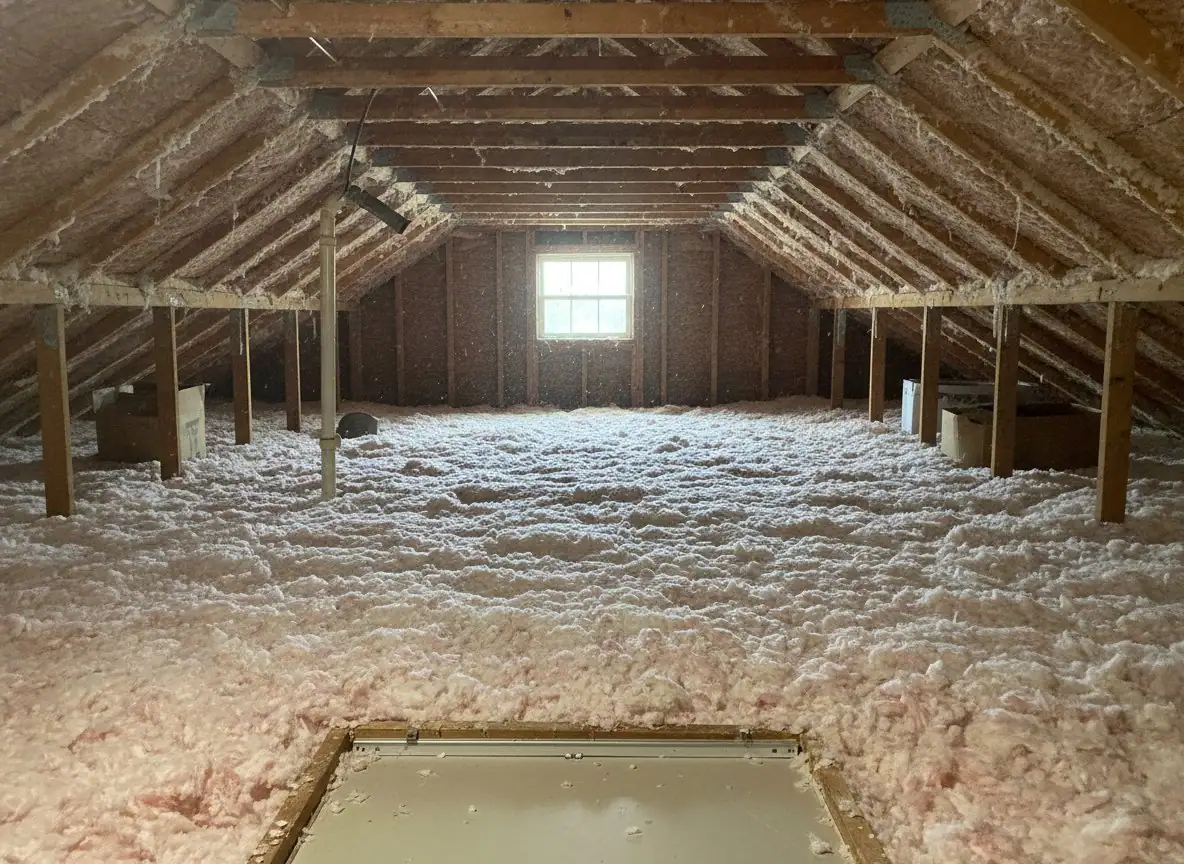
What is spray foam insulation?
Spray foam insulation is a liquid polyurethane mixture that a trained technician sprays through a gun, where it expands on contact with the substrate and hardens into a rigid or semi-rigid foam that insulates, air-seals, and fills gaps simultaneously. The two chemical components — an isocyanate and a polyol resin — are kept in separate containers and mix only at the spray tip, triggering the expansion reaction on the surface being treated. This distinguishes spray foam from every other insulation type: it creates a continuous barrier rather than a blanket or loose fill that can shift, settle, or leave seams.
The continuous barrier reduces drafts, lowers conditioned-air loss through the building envelope, and improves both thermal and acoustic comfort. Properly installed polyurethane foam that is protected from sunlight and persistent moisture generally lasts 25–30+ years without significant degradation. Because Norwalk homes built in the 1950s through 1980s often have unsealed top plates, penetrations around plumbing and electrical, and minimal attic insulation, spray foam is frequently the most practical solution for sealing those problem areas in a single pass.
Understanding which type of spray foam fits your specific situation is the logical next question — and the answer depends on where it will be applied.
At a glance
Open-cell vs closed-cell spray foam: which is right for your home?
The right choice between open-cell and closed-cell spray foam depends on the location, moisture exposure, and performance target for each area of the home.
| Property | Open-Cell Foam | Closed-Cell Foam |
|---|---|---|
| Density | ~0.5 lb per cu ft | ~2–3 lb per cu ft |
| R-value per inch | ~3.6 | ~5.6–5.7 |
| Moisture resistance | Vapor-permeable; not moisture-resistant | High; acts as a vapor retarder |
| Sound absorption | Excellent — soft cell structure absorbs sound waves | Moderate — rigid structure reflects more than absorbs |
| Structural contribution | Minimal | Adds rigidity to walls and roof decking |
| Best uses | Interior walls, conditioned attics, interior soundproofing | Attic roof decks, crawl spaces, exterior-facing walls, garages |
In Norwalk's climate, closed-cell foam is the most common choice for attic roof decks and crawl spaces because its moisture resistance prevents condensation issues during the region's occasional winter humidity. In interior partition walls, where sound control — between a bedroom and a living area, for example — is the primary goal, open cell spray foam excels. Some projects use both: closed-cell on the exterior-facing surfaces and open-cell in interior cavities.
Before deciding on a type, it is worth understanding the legitimate criticisms of spray foam, because they should inform both the product choice and the contractor you hire.
Free, no-obligation estimates
Talk to Bright Sky Attic Insulation
Tell us what you need and we’ll take it from there.
What is the downfall of spray foam insulation?
The primary downfalls of spray foam insulation are its higher upfront price compared with fiberglass or blown-in alternatives, the difficulty of removing it if repairs are needed, and the health and safety risks during installation if the application is handled incorrectly. To see how those numbers play out in practice, our page on cost breaks down what drives the price of each insulation type.
- Higher upfront cost: Spray foam typically costs more per square foot than blown-in or batt insulation, though the air-sealing benefit can offset that over time through energy savings.
- Difficult removal: Cured polyurethane foam bonds tightly to substrates. Removing it requires mechanical scraping or cutting, which is labor-intensive and can damage framing or sheathing.
- Installation fumes: Uncured spray foam releases isocyanate vapors and other volatile compounds. Occupants must vacate the space, and trained technicians must wear supplied-air respirators during application.
- Cure sensitivity: Off-ratio mixing — caused by equipment problems or cold substrate temperatures — produces foam that never fully cures, leaving a tacky, shrinking layer that performs poorly and cannot simply be overcoated.
- Combustibility: Cured foam is flammable and must be covered with a code-required thermal barrier when left exposed in occupied or accessible spaces.
- UV degradation: Exposed spray foam yellows and degrades under direct sunlight; it requires protection if installed in areas with UV exposure.
Several of these downsides have driven a broader conversation about whether spray foam is appropriate in every situation — a question Google users are increasingly searching.
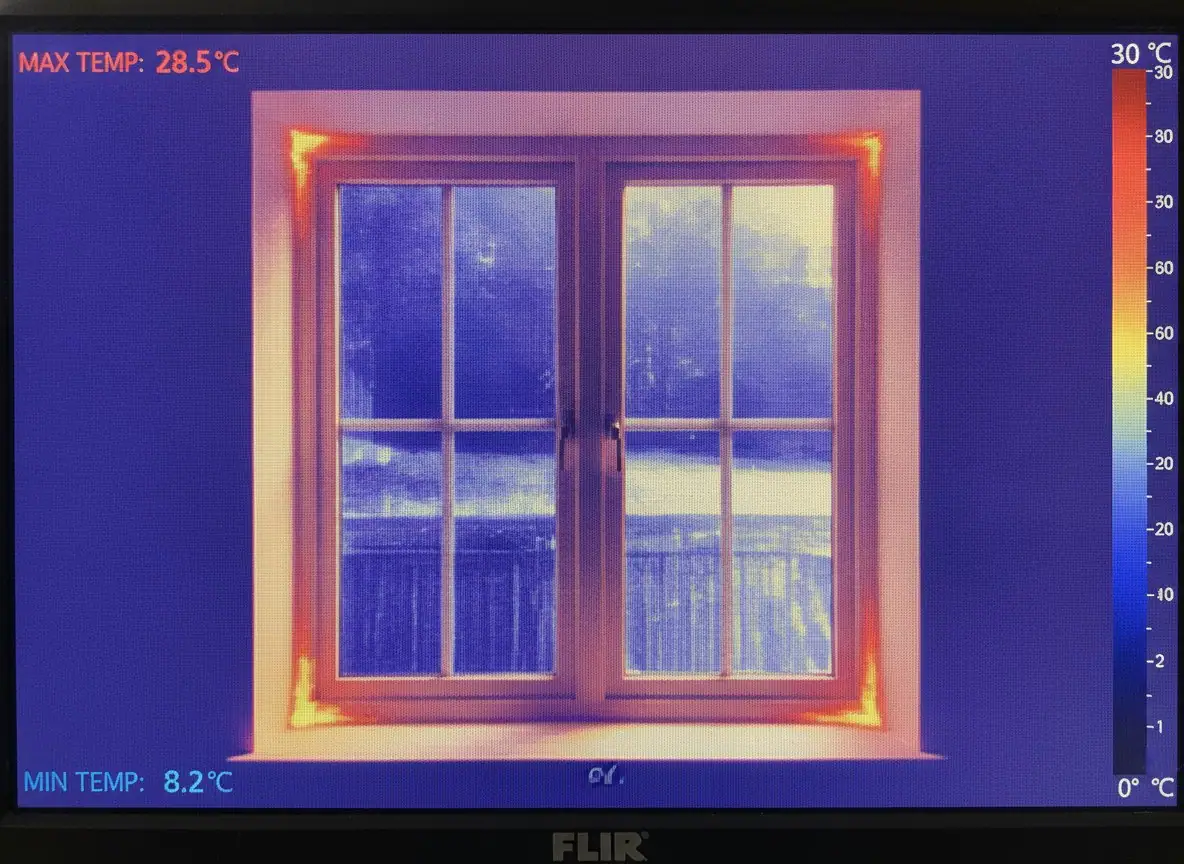
Why is spray foam insulation now a red flag?
Spray foam has become a red flag in certain real estate and lending contexts because off-ratio or poorly installed foam in roof timbers has caused documented cases of wood rot that are invisible from below, leading some mortgage lenders and surveyors — particularly in the UK market — to flag spray-foamed roofs as difficult to assess or finance. In the United States, the concern is narrower but real: DIY spray foam kits applied without proper surface preparation or ratio control can delaminate, shrink, or release uncured chemicals long after application. The key distinction is between professionally installed, properly cured product and foam applied without adequate equipment calibration. We use proportioners that maintain the precise 1:1 ratio of A-side to B-side components throughout the job, which is the single most important variable in producing foam that cures correctly and performs as rated. If you are buying or selling a Norwalk home with existing spray foam, a pre-sale inspection can confirm whether the installed foam is cured, bonded, and covered with the required thermal barrier.
Why are people removing spray foam?
Homeowners remove spray foam most often because of off-ratio curing failures, moisture trapped beneath closed-cell foam applied over already-damp framing, or the discovery of pest damage that cannot be inspected without first removing the foam. A less common but growing reason is homes where spray foam was applied directly to roof rafters without a thermal barrier, creating a fire-code violation that must be corrected before a sale can close. In Norwalk, we also encounter removal jobs where a previous contractor applied closed-cell foam over wet wood after a roof leak, sealing moisture against framing that then decayed. The practical decision rule: if the substrate is wet or damaged, it must be dried and repaired before any foam is applied — not after.
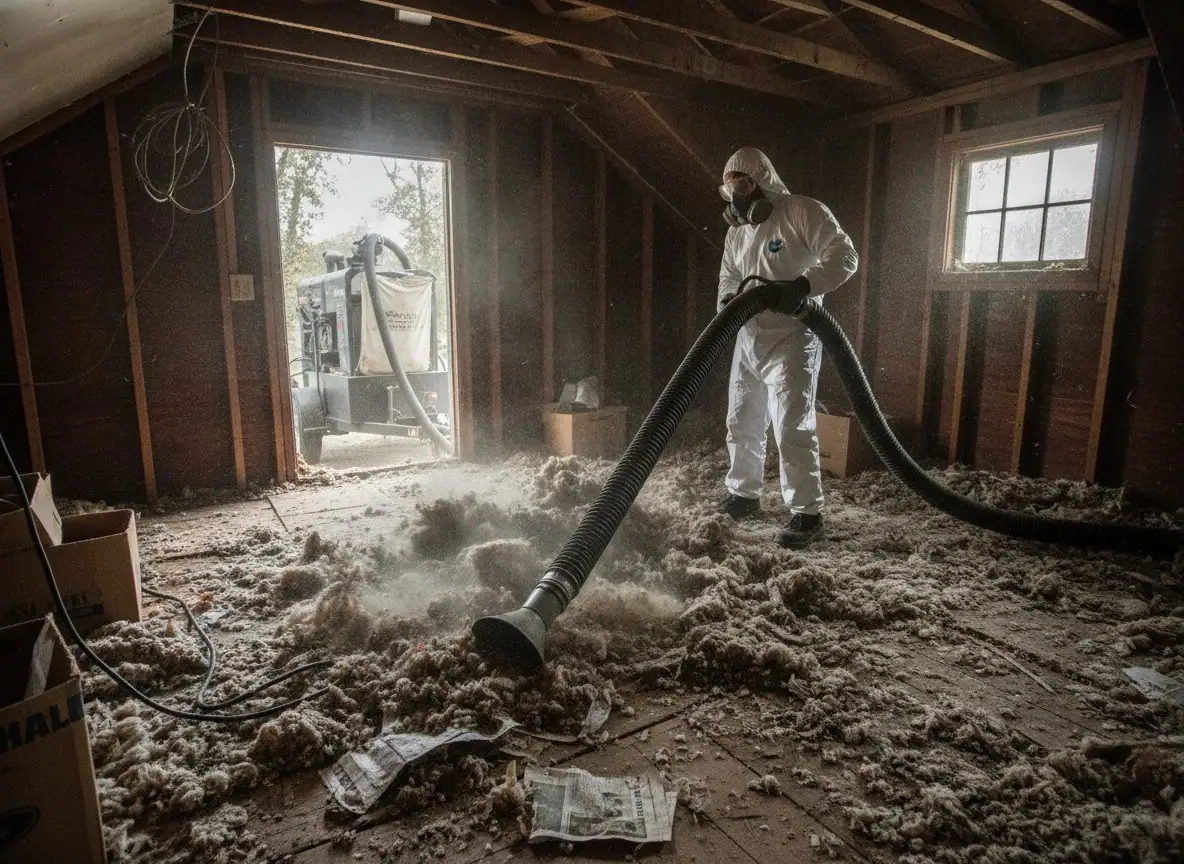
Can mold grow behind spray foam insulation?
Mold can grow behind spray foam insulation if the substrate was damp at the time of application or if bulk water later reaches the interface between the foam and the framing. Closed-cell foam itself does not support mold growth — it provides no food source — but wood framing sealed beneath foam retains whatever moisture was present when the foam was sprayed. Open-cell foam is vapor-permeable, which means moisture can migrate through it; in a climate-controlled Norwalk attic, this is generally manageable, but in an unconditioned crawl space it can allow ground moisture to accumulate against joists. The mitigation is straightforward: inspect and dry the substrate before application, and pair crawl space spray foam with proper ground vapor barriers and ventilation strategy. Because foam alone is not sufficient where ground moisture is the underlying issue, we offer crawl space insulation and encapsulation as a combined service.
Is spray foam fire-safe and low-Voc? (15-minute thermal barrier explained)
Cured spray foam is combustible, and building codes in California — including those adopted by municipalities across Los Angeles County — require that spray foam installed in occupied or accessible spaces be covered with a 15-minute thermal barrier, most commonly half-inch gypsum drywall. The 15-minute thermal barrier is a material assembly that, when tested to ASTM E119, delays the foam's ignition by at least 15 minutes when exposed to fire, giving occupants time to evacuate. Without that barrier, exposed foam in an attic space accessible for storage, or in a finished garage wall, is a code violation.
On VOCs: standard two-component spray foam emits isocyanate vapors and amine catalysts during and immediately after application. Low-VOC spray foam formulations reduce but do not eliminate off-gassing. In either case, occupants must leave the building during application and must not re-enter until the foam has fully cured and the space has been ventilated — typically 24 hours for most products, though the specific product data sheet governs. Our technicians follow re-entry protocols based on the product used on each job. We also offer low-VOC spray foam options for clients with chemical sensitivities; ask about this when requesting your estimate.
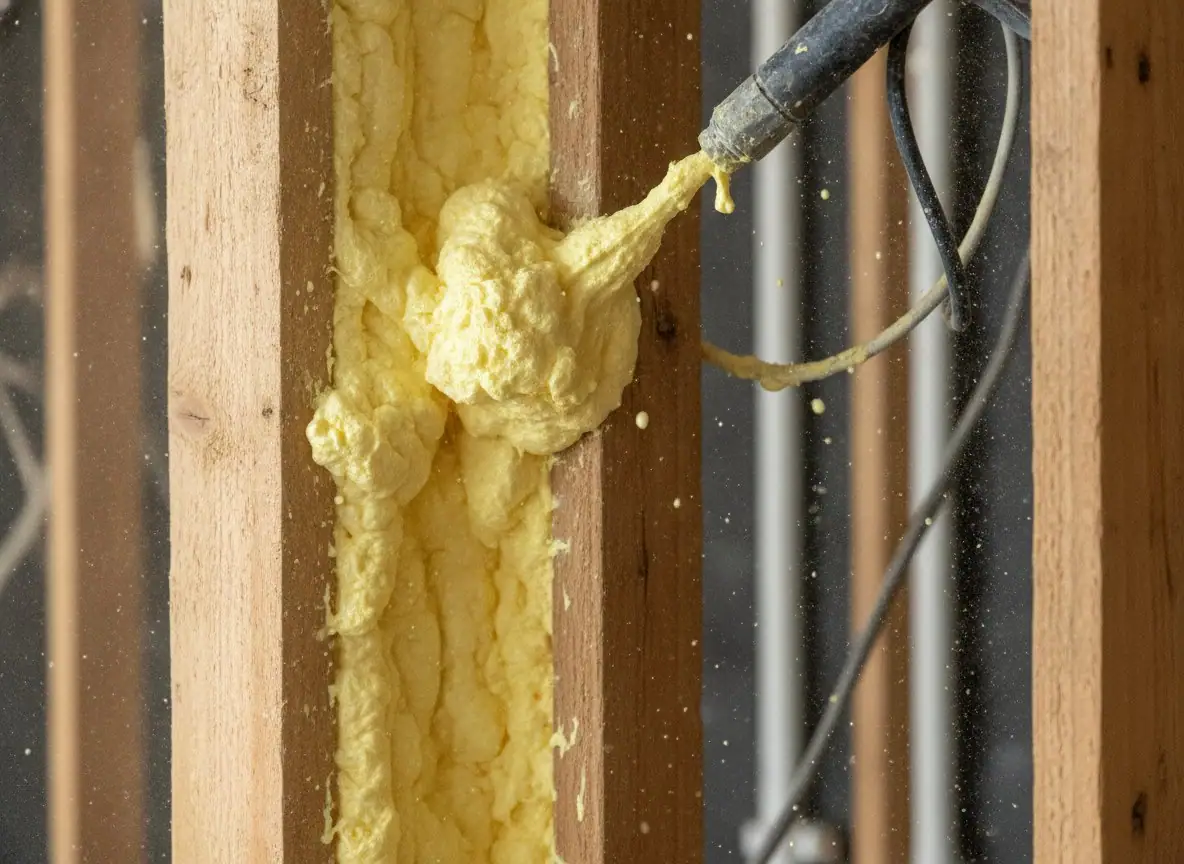
How is spray foam installed, and how long does it take?
A typical residential spray foam installation in Norwalk follows these steps:
- Free inspection: We assess the substrate condition, moisture readings, existing insulation, ventilation strategy, and access constraints — the pitch of an attic or the height of a crawl space directly affects labor time and equipment setup.
- Substrate preparation: Any existing damaged insulation is removed. Framing is inspected for moisture; wet or rotted wood is flagged for repair before foam is applied. Surfaces are cleared of debris and allowed to reach the minimum application temperature (typically above 40°F substrate temperature, rarely a constraint in Southern California).
- Masking and protection: Electrical boxes, HVAC components, and surfaces not receiving foam are masked. The work area is sealed to contain overspray.
- Equipment setup and ratio check: Proportioners are calibrated to maintain the 1:1 A-to-B ratio. A test spray on cardboard confirms correct cell structure and cure rate before the technician moves to the substrate. This step is what separates professional installation from kit-based DIY work, and it is the primary reason off-ratio failures occur in unmonitored applications.
- Application in passes: Foam is applied in controlled lift thicknesses — closed-cell typically in passes of 1–2 inches to prevent overheating during exotherm; open-cell can be applied in thicker passes. Multiple passes build up to the target R-value.
- Cure and inspection: Foam is inspected for voids, delamination, or uncured areas. Any deficient areas are addressed before the crew leaves.
- Thermal barrier installation: Where required by code, drywall or an approved intumescent coating is applied over the cured foam.
- Ventilation and re-entry: The space is ventilated per product specifications. Occupants are cleared to re-enter after the confirmed cure window, typically 24 hours.
Read moreShow less
A standard 1,000 sq ft attic can usually be sprayed in a single day; a larger or more complex job may require two days. The total project timeline including inspection, prep, application, and thermal barrier typically runs two to three days for most residential projects. Cost is the natural next question after understanding the process.
At a glance
How much does spray foam insulation cost in Norwalk, CA?
We do not publish fixed prices because spray foam project costs vary significantly based on the specific conditions of each home. We provide a written quote after a free on-site inspection. The table below shows the factors that drive spray foam insulation cost in Norwalk up or down.
| Cost Factor | Why It Affects Price |
|---|---|
| Square footage | More surface area = more material and labor time |
| Foam type (open-cell vs closed-cell) | Closed-cell material costs more per board foot |
| Target R-value / thickness | Greater thickness requires more material and more application passes |
| Access and attic pitch | Low-pitch or tight crawl spaces increase labor time and equipment setup complexity |
| Existing insulation removal | Tear-out and disposal add labor and haul-away cost |
| Substrate repairs | Wet or damaged framing must be repaired before foam can be applied |
| Thermal barrier requirements | Drywall or intumescent coatings add material and finishing labor |
| Permits | Los Angeles County permit fees vary by jurisdiction and project scope |
| Low-VOC product specification | Low-VOC formulations typically carry a material premium |
Factors for a 1,000 sq ft home in Norwalk
A 1,000 sq ft Norwalk home — typical of the post-war tract housing common in this area — usually involves a relatively compact attic with standard truss or rafter framing. The primary cost drivers at this scale are whether existing blown-in insulation needs removal first, the target R-value required by current California Title 24 energy standards, and whether the roof deck or just the attic floor is being treated. Contact us for a free inspection and written estimate specific to your home.
Factors for a 2,000 sq ft home in Norwalk
A 2,000 sq ft home doubles the material volume but may not double the labor if the attic layout is straightforward and access is good. Additional variables at this size include whether there are multiple HVAC systems to mask, the presence of recessed lighting penetrations that need individual sealing, and whether any areas of the crawl space or garage are being added to the scope. We serve homes of all sizes throughout Norwalk and the surrounding communities. Schedule your free estimate to get a price that reflects the actual conditions of your home.
How do you choose a spray foam contractor in Norwalk?
The right spray foam contractor in Norwalk demonstrates equipment competence, transparent product disclosure, and clear re-entry and thermal barrier protocols before the job begins. Use these criteria when evaluating any spray foam installer:
- Ask about their proportioning equipment: Heated, proportioned two-component rigs — not disposable kits — are the standard for residential work. Confirm the contractor uses them.
- Request the product data sheet: Any reputable foam company will tell you exactly which polyurethane foam product they are installing, its tested R-value per inch, and its re-entry and cure specifications.
- Confirm thermal barrier planning: Ask what thermal barrier will be installed over exposed foam and where. If a contractor cannot answer this question, they are not current with California building code.
- Verify substrate inspection is included: A contractor who does not check for moisture in framing before spraying is creating future liability for you.
- Get a written scope and quote: Verbal estimates for spray foam work are insufficient. The written quote should specify foam type, thickness, R-value, thermal barrier specification, and any prep work included.
- Check insurance: Spray foam involves chemical hazards and fire risk during application. Confirm the contractor carries liability insurance.
Read moreShow less
Bright Sky Attic Insulation serves Norwalk and the nearby communities of Pico Rivera, Bellflower, Artesia, Cerritos, Commerce, Downey, East Whittier, La Mirada, Lakewood, Montebello, Paramount, Santa Fe Springs, South Whittier, West Whittier-Los Nietos, Whittier, Buena Park, and La Habra. We offer free inspections, financing options, and 24/7 emergency service. We also assist homeowners navigating insurance claims where insulation damage is part of a covered loss.
Call (562) 573-5138 to schedule your free spray foam inspection and written estimate. There is no obligation, and the inspection gives you the substrate condition data you need to make a confident decision.

FAQ
FAQ
How long does spray foam insulation last?
Properly installed spray foam that is protected from UV exposure and bulk water intrusion generally lasts 25–30 years or more without significant loss of R-value or air-sealing performance. The bond between the foam and the substrate is typically the longest-lived part of the assembly; failures almost always trace back to incorrect installation or unresolved moisture problems rather than foam degradation over time.
Can spray foam be installed in an existing home?
Yes. Spray foam can be installed in an existing home's attic, crawl space, garage, or exposed wall cavities without requiring a full renovation. In walls with closed cavities, injection foam or other approaches may be more appropriate; we assess the best method for each area during the free inspection. Many Norwalk homeowners add spray foam to an existing home specifically to address energy performance issues that blown-in insulation alone cannot solve because of air leakage.
Do I need to leave the house during spray foam installation?
Yes. All occupants — including pets — must vacate the home during spray foam application and for the full cure window afterward, which is typically 24 hours but depends on the specific product used. Uncured spray foam emits isocyanate vapors that are hazardous to breathe. We confirm the product-specific re-entry time with every client before work begins and ventilate the space before clearing re-entry.
Is spray foam better than blown-in insulation for attics in Norwalk, CA?
It depends on the goal. Spray foam applied to the underside of the roof deck creates an unvented, conditioned attic that moves the thermal boundary to the roof line — this is beneficial when HVAC equipment is located in the attic, which is common in Norwalk homes. Blown-in insulation on the attic floor is less expensive and performs well when the attic is unoccupied and the HVAC is in the living space. Many projects use both: spray foam to seal penetrations and the top plate, and blown-in cellulose or fiberglass over the attic floor to build R-value economically. Blown-in work is one of all insulation services in Norwalk that we offer alongside spray foam.
Can spray foam be used in a garage or crawl space?
Yes. Spray foam is well-suited to both spaces. In a garage, closed cell spray foam on the ceiling and exterior walls improves thermal separation from the living space above and reduces noise. In a crawl space, closed-cell foam on the foundation walls and rim joists controls moisture and eliminates the cold floor effect common in older Norwalk homes. Crawl space work typically includes a ground vapor barrier as part of a complete encapsulation scope.
Does spray foam help with soundproofing?
Open-cell spray foam provides meaningful sound absorption in interior wall and ceiling cavities because its soft, porous cell structure dissipates sound energy. It reduces airborne noise transmission — voices, television, music — more effectively than a comparable thickness of fiberglass batt. Closed-cell foam adds mass and rigidity but is less effective at sound absorption because its dense structure reflects rather than absorbs. For dedicated soundproofing between rooms, we offer soundproofing and acoustic insulation as a standalone service using the appropriate combination of materials for each partition type. Our materials page explains how each option performs.
Why choose us
Why choose Bright Sky Attic Insulation?
Free estimates
Get a clear, no-obligation estimate before any work begins.
Licensed & insured
Your property and our crew are protected on every project.
Residential & commercial
One team for homes, multi-family and commercial properties.
Locally owned & operated
A local team serving your community and the surrounding area.
Get in touch
Find insulation help near you
Request a free estimate online or give us a call — our team will follow up quickly.
- Call us(562) 573-5138
- Visit14020 Pioneer Blvd K, Norwalk, CA 90650
- HoursMon-Sun 07:00-19:00